Ponytail Lift in Istanbul, Turkey
- What Is a Ponytail Lift?
- Ponytail Lift vs. Ponytail Facelift
- Benefits of Ponytail Lift Surgery
- Who Is a Suitable Candidate for a Ponytail Lift?
- Ponytail Lift Surgery: Procedure and Recovery
- How Long Should You Stay in Istanbul for a Ponytail Lift?
- Ponytail Lift Risks and Possible Complications
- Frequently Asked Questions About Ponytail Lift
Discuss your goals and questions with the clinic team. An online consultation does not replace an in-person examination.
Request a Ponytail Lift Consultation Contact Our Patient Coordinator
A youthful appearance is not simply about having fewer wrinkles. The position of the eyebrows, the contours of the cheeks, the definition of the jawline and the overall balance of the face all contribute to a refreshed, natural look.
“Ponytail Lift” and “Ponytail Facelift” are terms commonly used for facial rejuvenation techniques intended to lift selected tissues through incisions generally hidden within the hair. The exact meaning is not standardised: technique, dissection depth and treatment areas vary by surgeon and individual plan.
Patients researching a Ponytail Facelift in Turkey or an Endoscopic Ponytail Lift in Istanbul should understand what a procedure may address, what it may not address, and which alternatives are appropriate. This guide is general education, not a diagnosis or a promise of suitability or outcome.
What Is a Ponytail Lift?
A Ponytail Lift is generally associated with endoscopic facial rejuvenation of selected upper- and midface areas. The name refers to the lifted appearance some people notice when their hair is pulled back. Depending on the technique, surgery may address the outer eyebrows and temples, upper cheeks, midface or selected areas of soft-tissue descent.
Small incisions are often placed within the hair-bearing scalp. An endoscope—a slender camera—may help the surgeon view underlying tissues. The aim is to reposition selected tissues while preserving natural facial proportions, not to create a tight or exaggerated appearance.
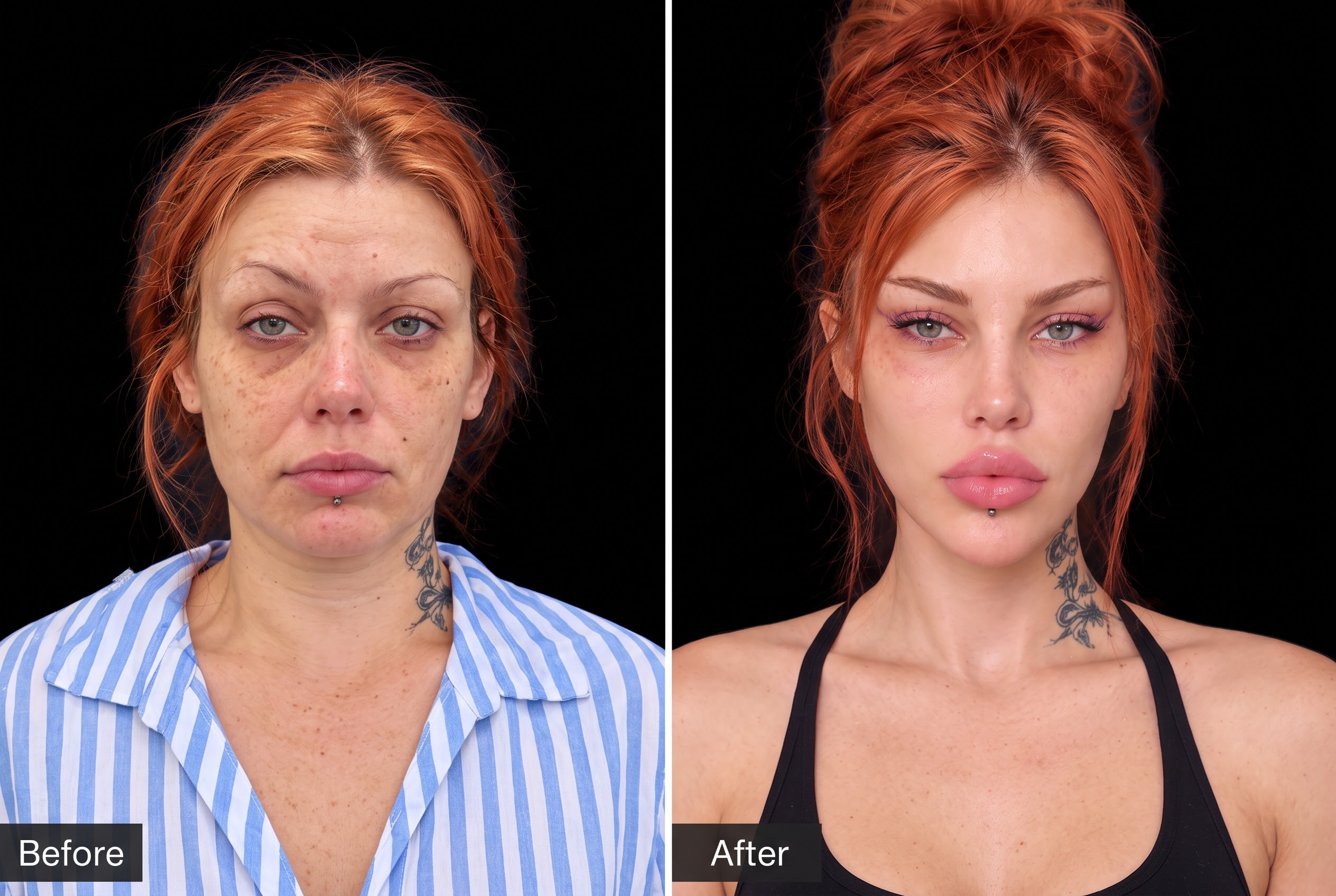
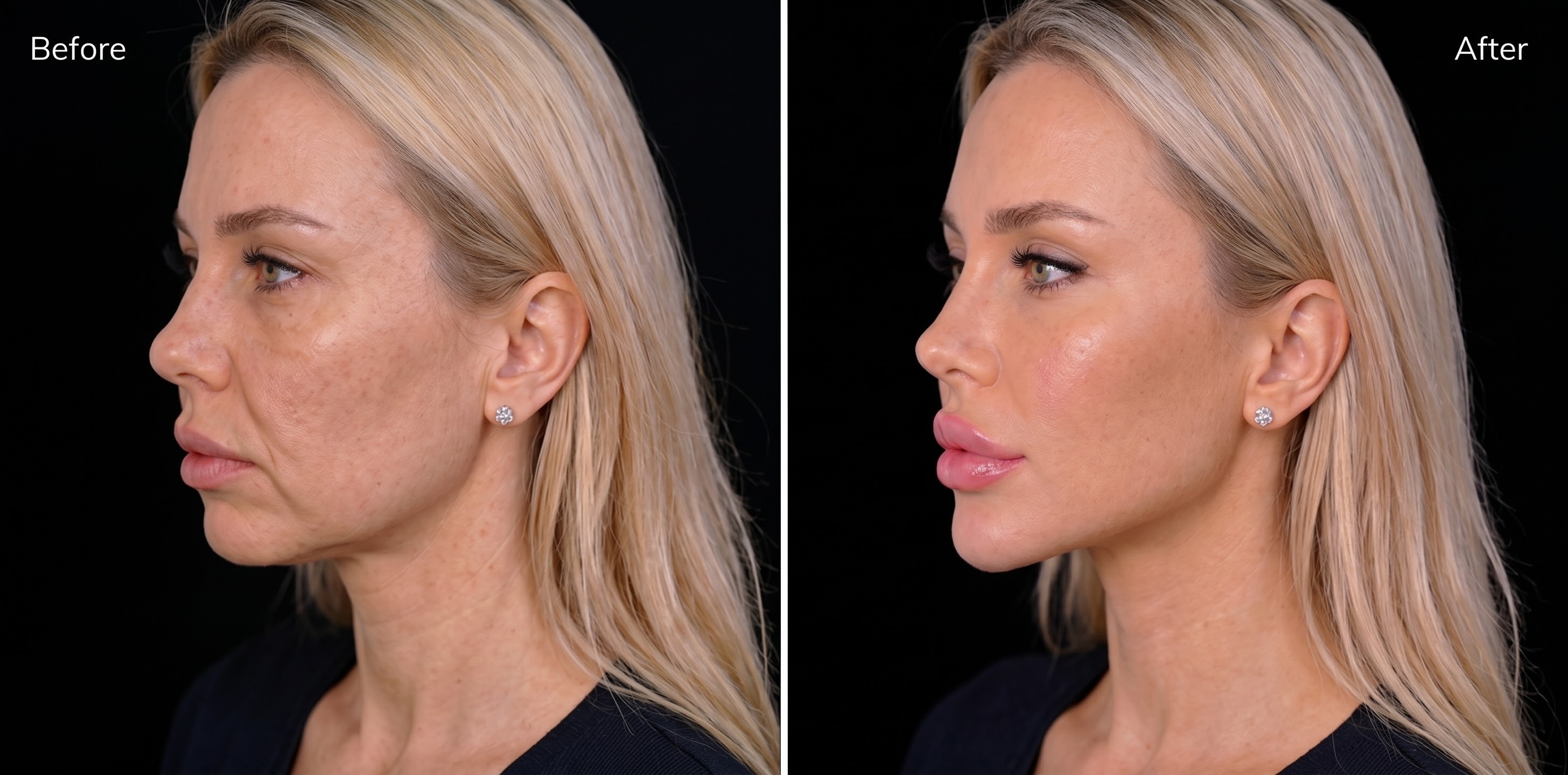
Before-and-after photographs show individual cases and should be discussed in context. They do not predict or guarantee another patient’s result.
Ponytail Lift vs. Ponytail Facelift
“Ponytail Facelift” may describe variations that treat a broader area than an isolated endoscopic lift. Depending on anatomy and technique, a plan may focus on the temples, cheeks and midface. It should not automatically be considered equivalent to a comprehensive facelift or face-and-neck lift.
| Consideration | Ponytail / endoscopic lift | Traditional facelift |
|---|---|---|
| Typical focus | Temples, eyebrows and midface, depending on technique | Commonly lower face, jawline and sometimes neck |
| Incisions | Often within the hair-bearing scalp | Often around the ears and/or hairline |
| Jowls and neck | May be limited for substantial lower-face or neck laxity | May be more appropriate when those areas need broader treatment |
| Planning | The operation should match the patient’s anatomy, goals and medical assessment. | |
A consultation can compare an endoscopic lift with a deep plane facelift, a facelift or face-and-neck lift, or another approach. The procedure name alone does not determine the right plan.
Benefits of Ponytail Lift Surgery
For selected patients, a Ponytail Lift or related endoscopic technique may offer concealed scalp incisions, improvement in selected upper- or midface descent, and a refreshed appearance while preserving individual features. Some techniques avoid prominent incisions around the ears.
These are potential benefits, not guarantees. The result depends on anatomy, surgical technique, healing and the degree of change required. Learn about related endoscopic brow lift and temporal lift approaches.
Who Is a Suitable Candidate for a Ponytail Lift?
A Ponytail Lift may be considered when concerns around the temples, eyebrows or cheeks match the areas the proposed technique can address. Candidates should be medically suitable for surgery and have realistic expectations about the likely extent of improvement.
It may be less suitable when there is substantial excess skin, pronounced jowling or significant neck laxity that the planned technique cannot adequately treat. Age alone does not determine suitability; facial anatomy, skin quality, medical history and personal goals matter. An individual assessment is needed.
Ponytail Lift Surgery: Procedure and Recovery
- Assessment: The surgeon evaluates facial anatomy, skin quality, tissue descent, symmetry and goals, and reviews medical history, medicines and prior procedures.
- Planning: Incision location, number and surgical approach depend on the technique and patient. Not every patient is suitable for an endoscopic approach.
- Tissue repositioning: Selected tissues may be released and repositioned using the chosen approach; endoscopic visualisation may be used where appropriate.
- Support and closure: Repositioned tissues are secured using the surgeon’s selected method, incisions are closed, and early postoperative monitoring and aftercare instructions are provided.
The procedure, anaesthesia and Ponytail Lift recovery plan vary. Swelling, bruising, temporary numbness, tightness and discomfort may occur. Follow instructions about wound care, sleeping position, medicines, activity and review visits. Avoid strenuous activity until the surgeon advises it is safe. Healing can continue for several weeks or longer, so the early appearance is not the final result.
How Long Should You Stay in Istanbul for a Ponytail Lift?
International patients should generally plan for approximately 7–10 days in Istanbul, subject to the procedure performed, individual healing, follow-up needs and the surgeon’s clearance to travel. This is a planning guide, not a guarantee that every patient will be ready to fly on a particular day.
The visit may include an in-person examination and preoperative review, surgery and monitoring, early recovery, and a postoperative assessment before travel. Swelling, bruising or other recovery issues may mean a longer stay. Plan flights with the operating surgeon and do not travel until medically cleared.
Ponytail Lift Risks and Possible Complications
As with other operations, endoscopic facial lifting can involve bleeding, infection, swelling, bruising, scarring, temporary or persistent changes in sensation, asymmetry, hair-related changes near incisions, an unsatisfactory result or revision surgery. Nerve injury and anaesthesia-related complications are also possible. Individual risks vary and should be discussed with the surgeon.
No technique guarantees perfect symmetry, permanent results or a particular degree of lift. A thorough consultation should cover benefits, limitations, risks and alternatives relevant to your case.
Frequently Asked Questions About Ponytail Lift
Will a Ponytail Lift make my face look pulled or unnatural?
The goal is to preserve natural facial proportions. The result depends on the technique, tissue repositioning and individual healing; a particular aesthetic outcome cannot be guaranteed.
Are the scars visible?
Incisions are often within the hair-bearing scalp. Visibility depends on location, healing, hair characteristics and technique. Visible scars or hairline changes can occur.
Does a Ponytail Lift treat the neck?
An isolated endoscopic lift generally does not provide the same degree of neck correction as a dedicated neck lift or comprehensive face-and-neck lift. Neck concerns should be assessed separately.
How long do results last?
Results vary with the procedure, ageing, skin quality, lifestyle and anatomy. Surgery does not stop the natural ageing process.
Can I combine it with other procedures?
Combination surgery may be considered for selected patients. Safety, operative time, medical history and expected benefit need individual assessment.
Can I return home after one week?
Some patients may travel after approximately 7–10 days, but this cannot be promised in advance. Healing, the operation and the surgeon’s assessment determine timing; a longer stay may be necessary.
Ponytail Lift in Istanbul with Assoc. Prof. Dr. Ekrem Keskin
Choosing facial rejuvenation starts with understanding your anatomy and identifying which changes matter to you. Assoc. Prof. Dr. Ekrem Keskin provides individual assessments for patients considering facial rejuvenation in Istanbul. Recommendations depend on concerns, medical history and expectations—not only on a procedure name.
A Ponytail Lift consultation with a surgeon in Istanbul can cover realistic improvement, incision placement, recovery, risks and alternatives. International patients may begin with an online consultation before travelling. To learn more about the surgeon, visit the doctor profile.
This article is for general education and does not replace an individual medical consultation. “Ponytail Lift” is not a universally standardised surgical designation; techniques, suitability, risks, recovery and travel arrangements must be assessed individually.
Medical References
Kao CC, Duscher D, et al. The Ponytail Lift: 22 Years of Experience in 600 Cases of Endoscopic Deep Plane Facial Rejuvenation. Aesthetic Surgery Journal. 2024;44(7):671–692. PubMed.