Best Deep Plane Facelift Surgeon in Istanbul, Turkey
There is no independent universal ranking that can identify one best facelift surgeon for every patient. A responsible comparison looks at the surgeon’s training, relevant experience, the planned operation, the facility, anaesthesia, aftercare and how openly risks and alternatives are discussed.
- How to interpret “best” when choosing a facelift surgeon in Istanbul
- What a deep plane facelift changes — and what it does not
- Deep plane vs SMAS, mini facelift and face-and-neck lift
- Who may be considered for deep plane facelift?
- How to assess a surgeon, hospital and follow-up plan in Istanbul
- Recovery and flying home after surgery
- Questions to ask before booking from the UK or US
- What happens during a consultation with Dr. Ekrem Keskin
- Deep plane facelift questions patients ask
- Medical references and editorial note
How to interpret “best” when choosing a facelift surgeon in Istanbul
The word “best” is often used in searches because patients want reassurance. It does not, by itself, tell you whether a surgeon is appropriate for your anatomy or whether the proposed operation is the right one. A more useful assessment asks:
- Does the surgeon explain the anatomy they are evaluating and the limits of the proposed procedure?
- Can you verify their medical training, registration, relevant surgical experience and hospital arrangements?
- Are the risks, alternatives, anaesthesia plan, aftercare and possible need for revision discussed clearly?
- Who will assess you in person, perform the operation, monitor you afterwards and answer questions after you return home?
- Are photographs and testimonials presented with enough context to understand the procedure and follow-up period?
For an international patient, trust is built through verifiable details and continuity of care, not through a superlative alone.
What a deep plane facelift changes — and what it does not
A deep plane facelift is one of several facelift techniques. It works in an anatomical plane beneath the superficial musculoaponeurotic system, commonly called the SMAS, and may involve releasing selected retaining structures before repositioning facial soft tissue. The exact dissection and fixation plan varies with the surgeon and the patient.
The aim is to address selected changes such as cheek descent, jowling and loss of jawline definition without relying on skin tension as the only source of support. It does not stop ageing, replace lost volume in every area, or change a person’s fundamental identity. It also cannot guarantee invisible scars, a particular degree of lift or a fixed duration of improvement.
Peer-reviewed anatomy research supports careful discussion of facial spaces, retaining structures and the variable course of facial nerve branches. It does not establish that deep plane surgery is universally superior or appropriate for everyone. A technique should be selected after assessment, not because its name appears more advanced.
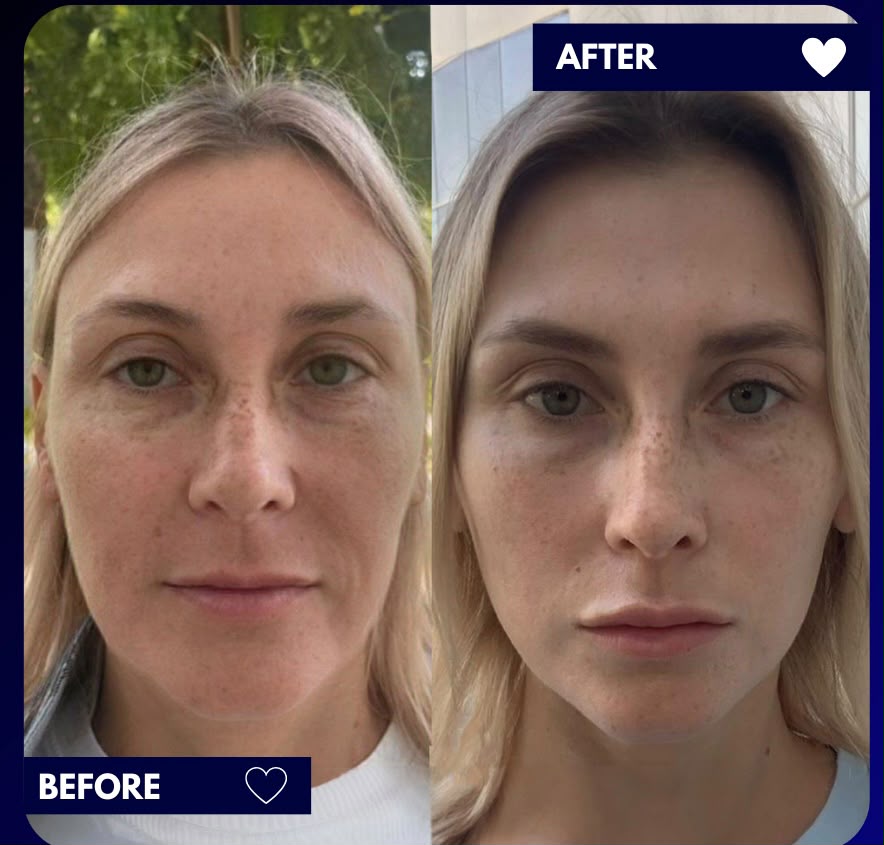
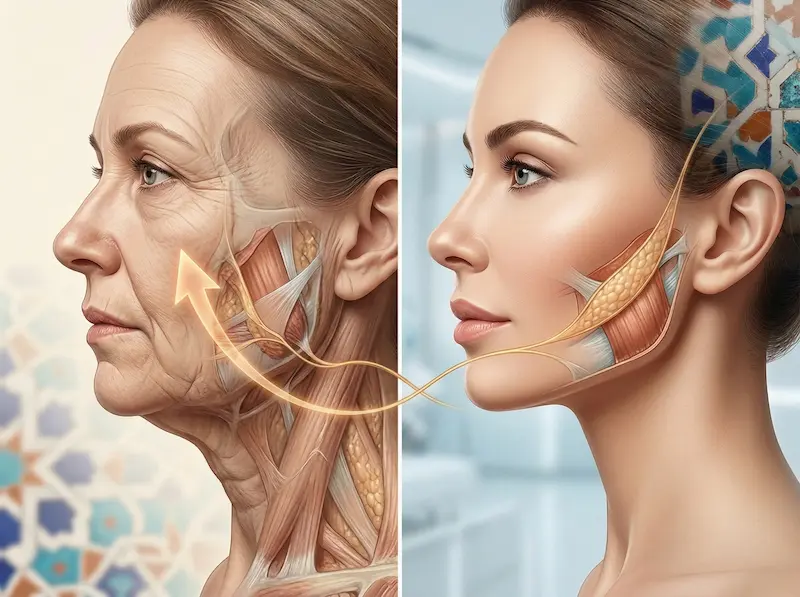
Deep plane vs SMAS, mini facelift and face-and-neck lift
Technique names are not interchangeable. In broad terms, SMAS procedures may involve plication, imbrication or elevation of the SMAS layer. A deep plane approach may mobilise a skin–SMAS unit after dissection in a deeper plane. A mini facelift usually describes a more limited incision pattern or treatment area, but it has no single universal definition.
A face-and-neck lift may be considered when laxity in the lower face is connected with changes under the chin or along the neck. In another patient, a narrower plan may be more appropriate. The decision depends on the distribution of laxity, skin quality, facial structure, health, goals and the trade-offs the patient is willing to accept.
The important question is not which label wins. Ask what each proposed operation is expected to improve, what it will not address, how the plan handles the neck and how the surgeon manages the relevant risks.
Who may be considered for deep plane facelift?
Suitability is decided individually. A consultation may consider visible laxity, cheek and jawline changes, neck concerns, skin quality, general health, smoking or nicotine use, medications, previous procedures and the patient’s expectations. A person who wants a small change may not need the same operation as someone with combined midface, jowl and neck laxity.
Good planning also includes what a facelift cannot correct on its own. Surface texture, pigmentation, fine lines, volume loss and eyelid changes may need different treatments or may be left untreated. Combining procedures can increase complexity and recovery, so it should be discussed as a clinical decision rather than assumed from a package.
An online consultation can help identify goals and collect medical history and photographs. It cannot replace a physical examination, and a remote opinion should not be treated as final clearance for surgery.
How to assess a surgeon, hospital and follow-up plan in Istanbul
Before travelling, ask for the surgeon’s full professional title, relevant training, registration details and experience with the operation being discussed. Ask who will perform the surgery and who will provide anaesthesia. Confirm the exact operating hospital rather than relying on a group name or a general city description.
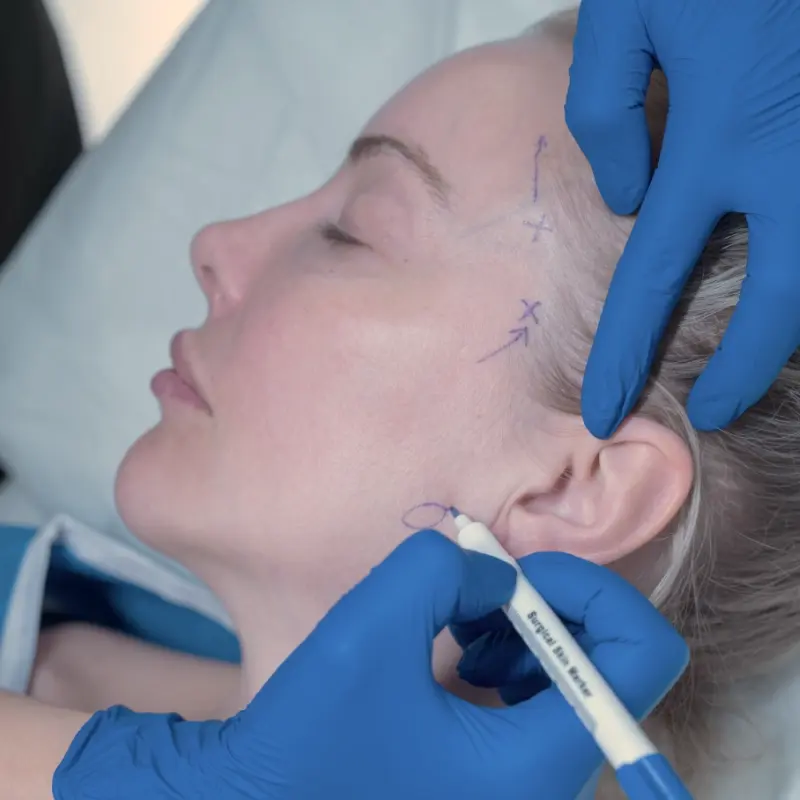
According to clinic-provided information, Dr. Ekrem Keskin completed a two-month period as a Clinical Observer at the renowned Cleveland Clinic in Ohio.
Memorial Şişli Hospital is JCI-accredited and was the first hospital in Turkey to receive JCI accreditation.

For international patients, the written plan should also cover:
- the consultation and examination process before surgery;
- the hospital, surgeon and anaesthesia arrangements;
- the first postoperative reviews and how urgent concerns are handled;
- the records and medication information you will receive before returning home;
- who to contact after you return to the UK, US or another country.
Recovery and flying home after surgery
Swelling, bruising, tightness, numbness and temporary changes in sensation can occur after facelift surgery. The extent and duration depend on the operation, the patient’s health and healing, and the aftercare plan. A published range can provide orientation, but it cannot replace the surgeon’s instructions.
Air travel after major surgery requires individual planning because surgery and prolonged sitting can both affect clot risk. Do not book a return flight on the assumption that every patient can leave Istanbul after seven or ten days. The operating team should examine you, review your recovery and give clear advice about whether and when flying is appropriate.
Before travelling, confirm what happens if you develop bleeding, infection, wound-healing problems, increasing pain, shortness of breath or another concern after returning home. NHS and CDC guidance both emphasise the importance of arranging follow-up and knowing who will manage complications.
Questions to ask before booking from the UK or US
- What exact changes does the proposed operation aim to address, and what will it not address?
- Which technique is recommended for my anatomy, and what alternatives were considered?
- Who will perform the operation and provide anaesthesia?
- Which exact hospital will be used, and how can I verify its current status?
- What are the common and serious risks, and how are complications managed?
- How many in-person reviews are planned before I return home?
- What written records, medication instructions and emergency contact details will I receive?
- What factors determine when I can safely fly home?
- What is included in the quotation, and which costs could arise separately?
- Who will remain available for questions after I return to my country?
What happens during a consultation with Dr. Ekrem Keskin
The first step is to describe what you would like to improve, your previous procedures, your medical background and your practical travel constraints. Clear photographs can support an initial conversation, but the final plan should follow an appropriate in-person assessment.
During consultation, the discussion should cover facial anatomy, the relationship between the cheek, jowl and neck, skin quality, possible alternatives, anaesthesia, hospital arrangements, risks, aftercare and the timing of return travel. You should have enough information to decide whether the plan feels appropriate; a consultation should not pressure you into booking.
If a quotation includes hotel, transfer or aftercare services, ask for each inclusion in writing. Prices vary with the procedure and the hospital and should not be compared without checking what is included.
Deep plane facelift questions patients ask
Is deep plane facelift better than SMAS facelift?
Neither name is universally better for every patient. The procedures can involve different planes and methods, and the evidence base contains heterogeneous studies. The appropriate choice depends on anatomy, goals, health and the surgeon’s assessment.
Are deep plane facelift scars invisible?
No scar can be promised to be invisible. Incisions are planned with attention to discreet placement, but scar visibility varies with healing, skin characteristics, tension, sun exposure and other factors.
How long do the results last?
There is no reliable fixed number that applies to every patient. Age, tissue quality, lifestyle, the operation performed and natural ageing all influence how the face changes over time.
Can I have the operation after an online consultation?
An online consultation can begin the process, but it does not replace a physical examination or establish final suitability. The surgical plan and travel advice should be confirmed by the responsible clinical team.
Should I choose a surgeon because the page says “best”?
Use the phrase as a starting point for research, not as proof. Compare credentials, relevant experience, facility arrangements, risk communication, aftercare and the clarity of the consultation.
Medical references and editorial note
This page was prepared as patient education for international readers. It does not replace a consultation with a qualified medical professional. Information, availability, hospital arrangements and travel advice can change and should be confirmed directly before booking.
Medically Reviewed by Op. Dr. Ekrem Keskin. Updated 19 September 2026.
- Anatomy of the Facial Glideplanes, Deep Plane Spaces, and Ligaments, Plastic and Reconstructive Surgery, 2024.
- The Deep Plane versus SMAS Facelift: A Systematic Review and Meta-Analysis, Aesthetic Plastic Surgery, 2025.
- NHS: Facelift (rhytidectomy).
- NHS: Cosmetic surgery abroad.
- CDC Yellow Book: Medical tourism.
- American Society of Plastic Surgeons: Choosing a plastic surgeon for a facelift.